St. George Elite Stucco: Residential & Commercial Stucco Contractor in St. George, Utah

St. George Elite Stucco is a licensed stucco contractor with 15 years of experience working on residential and commercial properties in St. George, Utah, handling stucco replacement and removal, stucco installation, and new construction stucco. We also provide resurfacing and recoating, remediation, and stucco painting and coatings as well as decorative and architectural details, interior plastering, and stucco repair. We work for homeowners, property managers, and builders, and we are licensed and insured.

We treat one-coat stucco, Traditional Three-Coat Stucco, and drainage EIFS as separate wall systems. EIFS stands for exterior insulation and finish system. On a stucco installation we detail two layers of water-resistive barrier behind the metal lath, the wire mesh the plaster grips. A 1/4-inch furring gap holds the lath off the wall. A weep screed at the base gives water a path out.

Recurring stucco damage can sometimes originate in the drainage, flashing, lath, or water-resistive barrier behind the visible finish. We identify a wall's system and inspect its damage before scoping the job. We then explain whether it calls for a localized repair, resurfacing, remediation, or full replacement. On a repair we match texture and color on a sample panel first. An integrally colored acrylic finish and a mineral cement finish carry color through the coat itself.

We serve St. George, Washington City, Hurricane, Santa Clara, and other areas across Washington County. Call today or use our quote form for a free onsite estimate.

Request a Free Estimate

We're ready to take on your project!

Why Choose St. George Elite Stucco

St. George Elite Stucco gives you clear answers before work starts. Our written estimates identify the wall system, the proposed thickness, and the finish material. Our stucco experts put all three in writing, so you can see exactly what the proposed work covers.

Credentials, Coverage, and How We Work

Our licensed stucco applicators carry general liability and workers' compensation. Certificates are available before work starts, and our license number goes on every written estimate. We work locally and put every estimate in writing at no charge. We build to ASTM C926 for the plaster and ASTM C1063 for the lath. On three-coat work that means building to the full nominal 7/8 inch that the assembly specifies. We treat weep screed and drainage-plane detailing as code-critical.

At a Glance

Licensed & Insured | 15 Years of Experience | Free Written Estimates | Residential & Commercial

How We Work With You

You get one point of contact from the first inspection to the last walkthrough. We confirm dates and the work sequence before anyone shows up. We protect windows, landscaping, and driveways before work starts, and we clear staging and debris when it ends. Texture and color are matched to the existing wall before we commit a finish to it.

Call (435) 236-2699 or use our quote form to schedule a free on-site estimate.

Stucco Contractor Services in St. George and Washington County

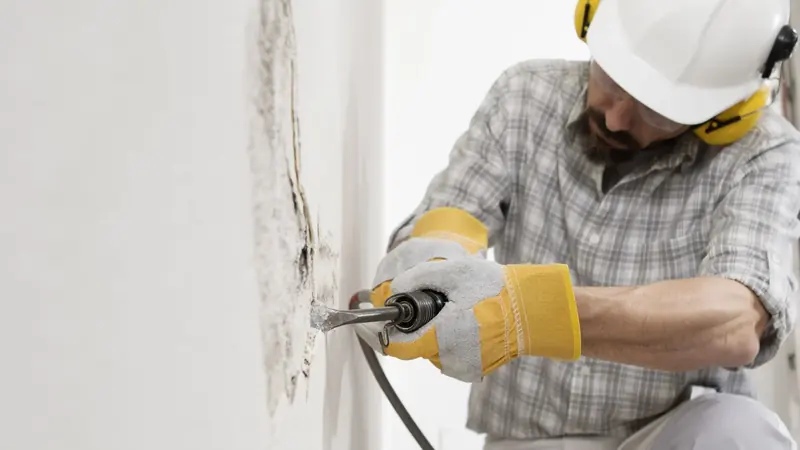
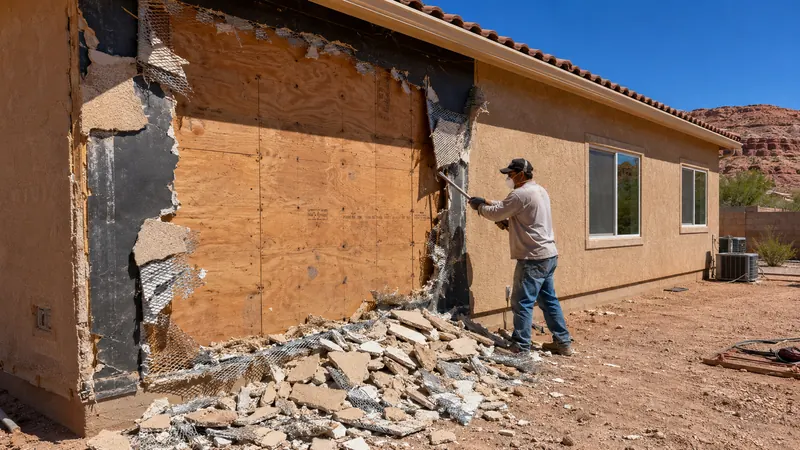
Stucco tear-off exposing plywood sheathing and torn water-resistive barrier on a St. George home

Stucco Replacement & Removal

A tear-off to sheathing removes the existing lath and water-resistive barrier. We check the sheathing for delamination, staining, and corroded fasteners, then rebuild the assembly to IRC R703.7. Containment, debris volume, and disposal routes are planned around occupied buildings.

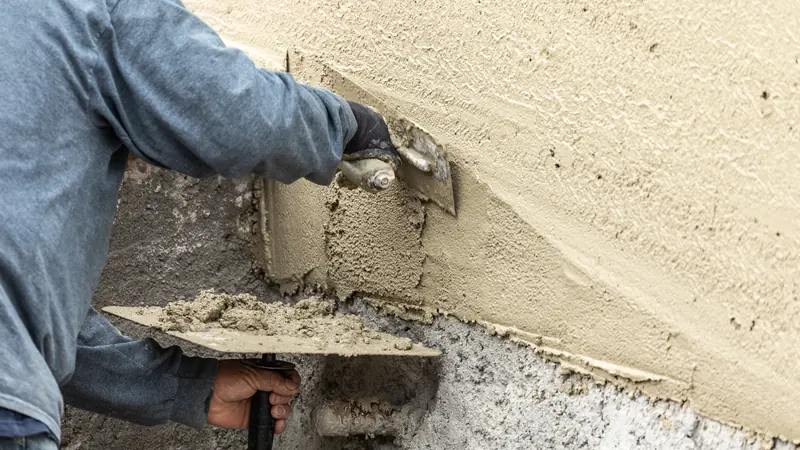
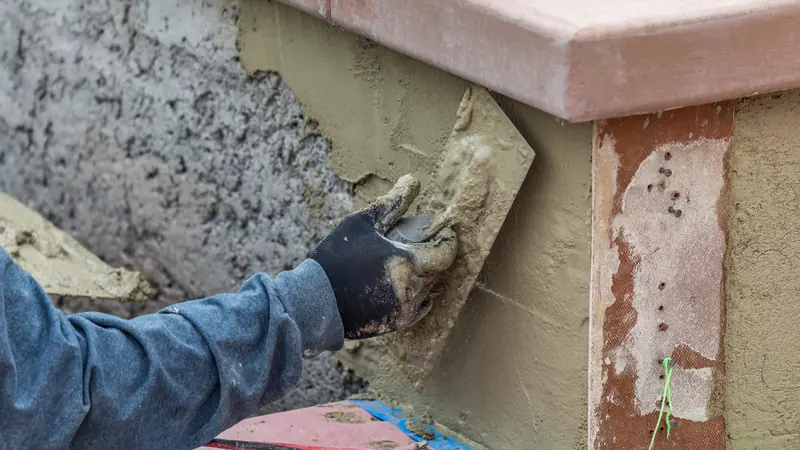
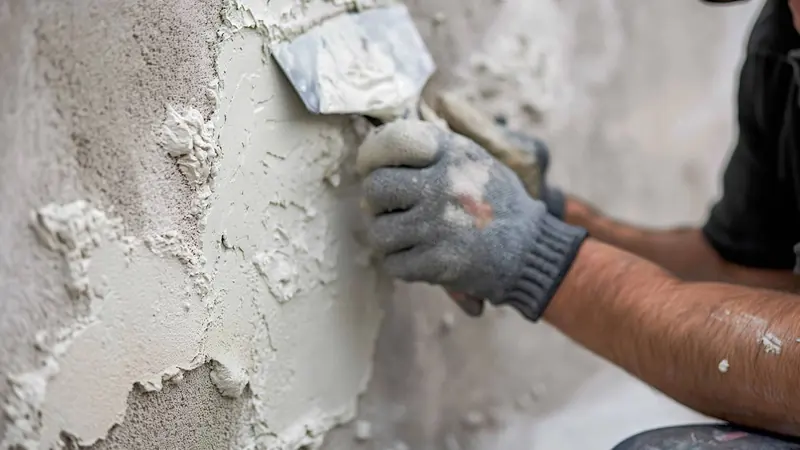
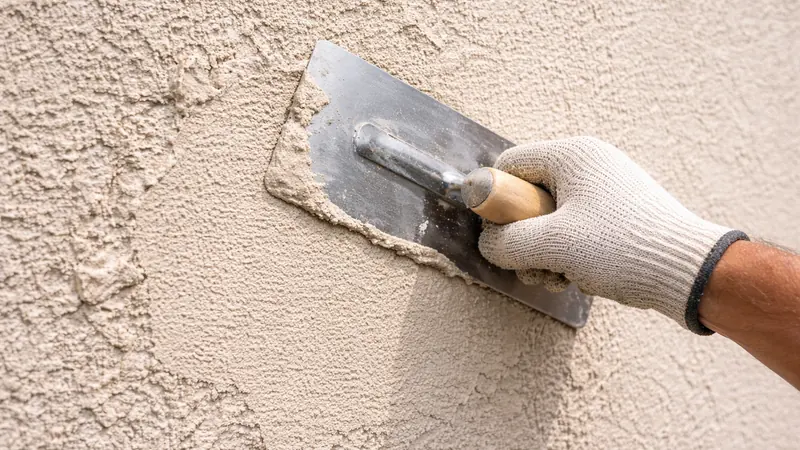
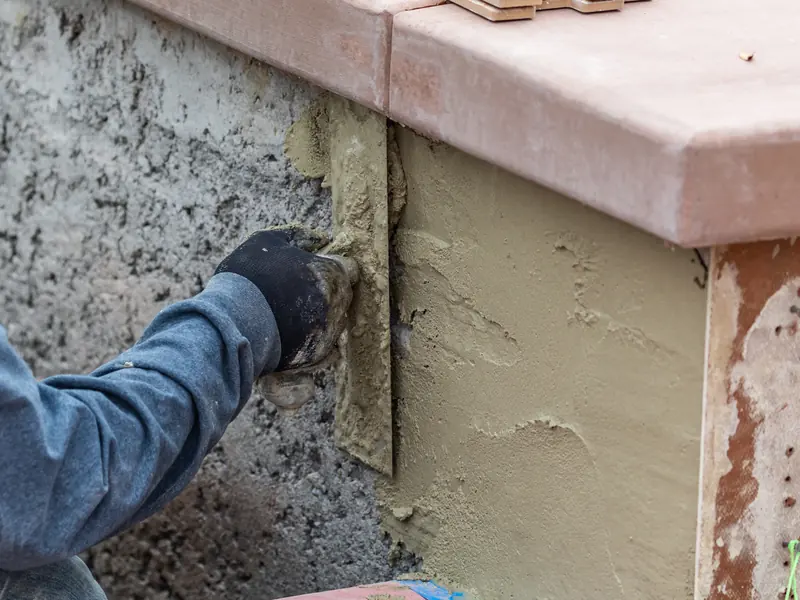
Plasterer applying a stucco coat with a hawk and trowel during a stucco installation

Stucco Installation

Stucco installation retrofits an existing building with a new exterior plaster assembly. On framed walls we hang metal lath over a doubled water-resistive barrier. Then we set the trim that edges the work: casing bead, corner aid, and control joints. Existing windows, doors, and roof edges get their terminations rebuilt as the new assembly reaches them. Scaffold stays up until the finish has cured.

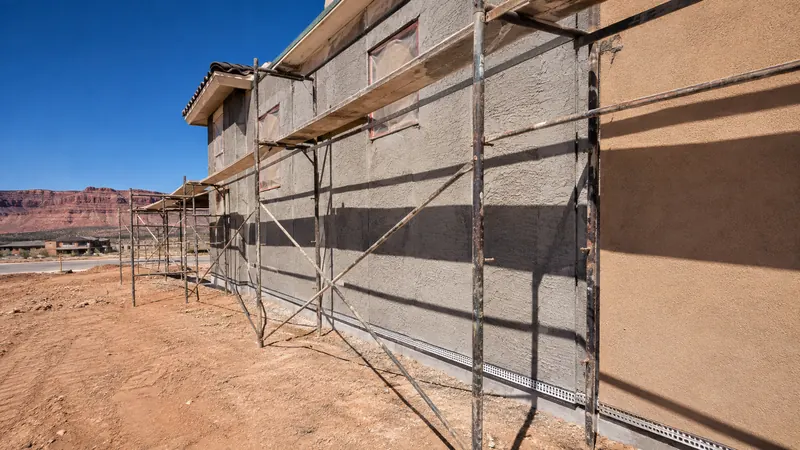
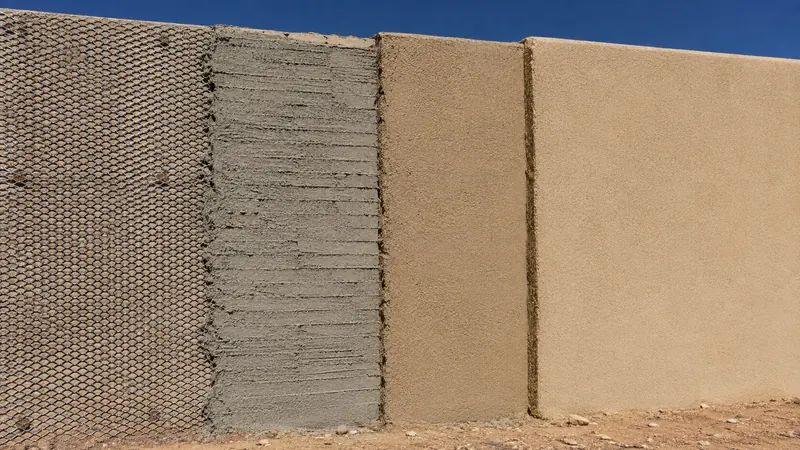
Scratch coat on a new construction stucco wall, scaffolding up and red rock cliffs behind

New Construction Stucco

New construction stucco goes onto a wall that has never carried an exterior finish. We schedule around framing, roofing, window installation, and flashing so each elevation is ready before plaster work begins. Builders can specify an engineered one-coat base or a full three-coat assembly. Color and texture are approved by elevation before crews mobilize, on custom homes, phased developments, and multi-lot projects.

Fresh finish coat troweled over a faded wall during stucco resurfacing and recoating

Stucco Resurfacing & Recoating

A fog coat refreshes color with a cement-based treatment. A new finish coat changes the surface more substantially, and a full re-skin adds a bonded plaster layer over the existing wall. Integral pigment carries the selected color through the new finish rather than placing it only on the surface.

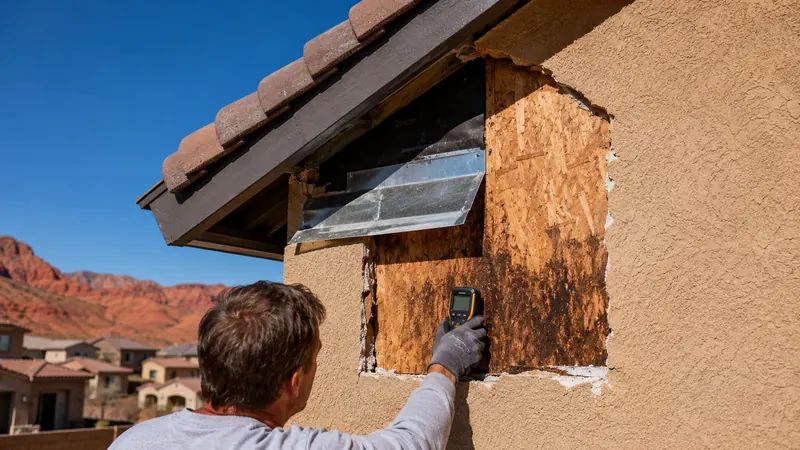
Kickout flashing and moisture-stained sheathing exposed during stucco remediation

Stucco Remediation

We map affected areas with a moisture meter before setting a scope. Corrections can include kickout flashing at a roof-wall intersection, sill pan flashing under a window, or repairs to the drainage plane. Weep screed clearance is 4 inches above earth and 2 inches above paved surfaces.

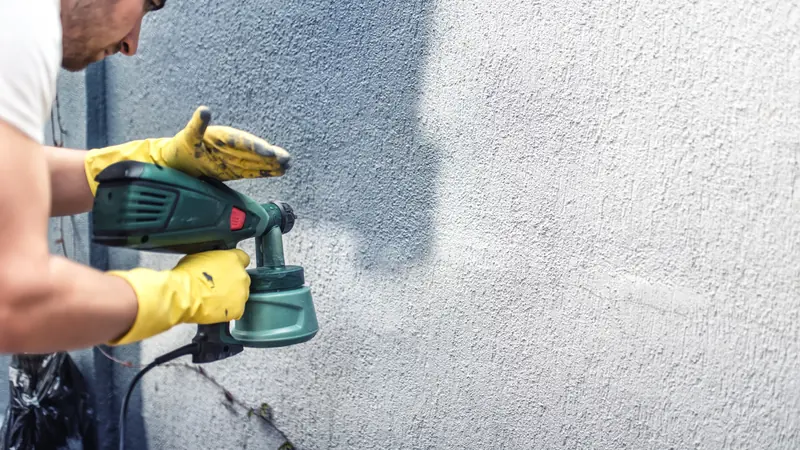
Sprayer applying a breathable coating over a textured stucco wall

Stucco Painting & Coatings

Stucco painting changes color without changing the wall’s thickness or texture. We test the surface for chalking and alkalinity first, then wash it and prime bare or patched areas. Mineral paint and limewash let the wall breathe, while an elastomeric coating gives a flexible film. A pigmented finish coat differs from paint because it renews the stucco surface itself.

Two-coat stucco applied over a concrete block courtyard wall in Washington County

Stucco for Block Walls

Privacy and courtyard walls in St. George often use a concrete masonry unit as the structural base. Sound masonry accepts a two-coat application because the block replaces framed-wall lath. Dense, painted, or previously sealed surfaces need bond preparation, sometimes including a dash bond coat, a rough thrown layer the plaster can grip. We carry each control joint and expansion joint through the finish instead of bridging it. Caps and copings direct water away from the top of the wall.

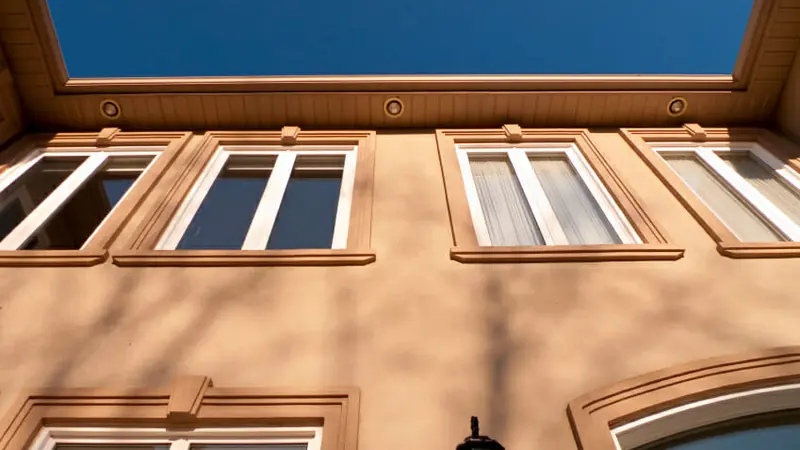
Decorative stucco bands and window surrounds shaped on a warm-toned exterior wall

Decorative Stucco & Architectural Details

Decorative stucco shapes the trim that projects from the main wall surface. We cut expanded polystyrene shape stock for bands, sills, quoins, window surrounds, and column wraps, then wrap it in mesh-reinforced base coat. Arches and curved openings get a full-size radius layout before anything is cut. The finish carries across the shape so the trim keeps its depth and shadow line.

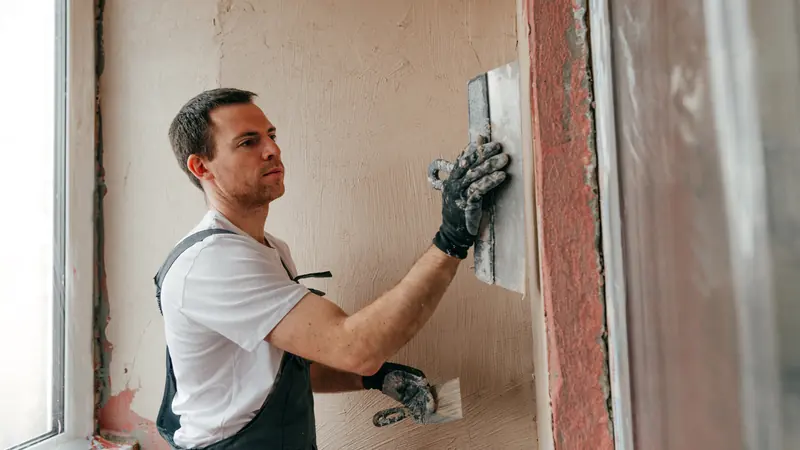
Interior plastering, a smooth gypsum plaster coat troweled onto an interior wall

Plastering Services

Interior plaster is a different material family from exterior portland cement plaster. We apply full-thickness gypsum and lime plaster, and veneer plaster over blueboard, a gypsum panel faced for plaster. A veneer coat runs 1/16 to 1/8 inch and gives a hard, continuous surface. On older wood lath walls we restore the plaster keys, the ridges that grip the lath. Finishes include smooth, sand, and knockdown.

Routing out a stucco crack before filling it with elastomeric sealant

Stucco Repair

We classify a hairline shrinkage crack separately from a movement crack, then route and fill with elastomeric sealant where the joint needs to flex. A bonding agent ties the patch to sound base, and a compatible mix restores the surrounding thickness.

Stucco Systems and Finishes

Our stucco applicators separate three choices: the wall system, the number of cement coats, and the finish material. Local use of “synthetic stucco” can loosely include acrylic products, so the name a wall goes by does not always describe the assembly underneath it.

Fiber-reinforced one-coat stucco base going on in a single pass

One-Coat Stucco

One-coat stucco uses an engineered, fiber-reinforced cement base instead of separate scratch and brown layers. The base runs 3/8 to 1/2 inch, so it installs faster than a three-coat wall. Despite the shorter build, it is a cement system, not a synthetic one. It suits new homes, additions, garages, and casitas, and it takes either a cement or an acrylic finish.

Traditional three-coat stucco in stages: metal lath, scratch coat, brown coat and finish coat

Traditional Three-Coat Stucco

Traditional Three-Coat Stucco builds a full hard-coat wall over metal lath. It goes on in three passes: a scratch coat keyed into the lath, a brown coat that levels the wall, and a finish coat. Residential code generally calls for three coats over lath. Custom homes, remodels, additions, and heavy-use walls all suit the heavier assembly, as do repairs continuing an existing three-coat wall.

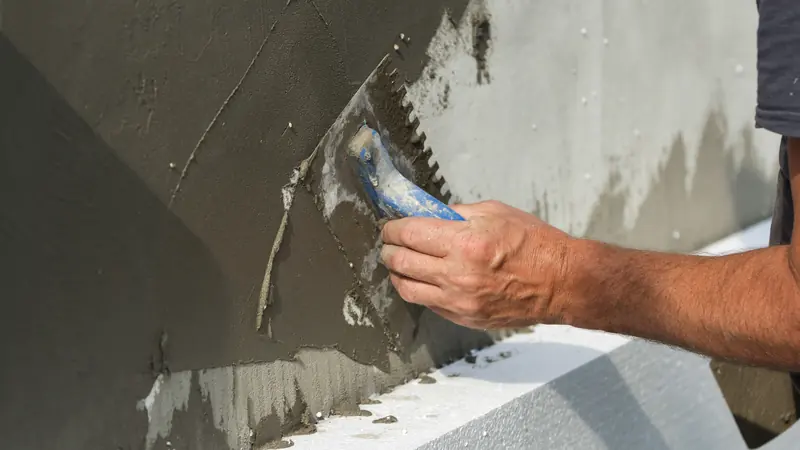
Mesh-reinforced base coat troweled over insulation board in an EIFS synthetic stucco assembly

EIFS and Synthetic Stucco

EIFS is a complete insulated cladding assembly, not an acrylic finish over ordinary cement plaster. It layers a water-resistive barrier, insulation board, a mesh-reinforced base, and an acrylic finish coat. On framed walls it must be installed as EIFS with drainage. It shows up most on commercial and multifamily buildings, on energy-efficient construction, and on architectural shapes.

Acrylic stucco finish troweled over a prepared base coat

Acrylic Stucco Finishes

Acrylic stucco is a finish material, not a wall system. It goes over an approved base: a one-coat base, a brown coat, Traditional Three-Coat Stucco, masonry, or EIFS. It holds color and flexes better than many cement finishes, which matters under this sun. Homes here often pair hard-coat stucco with an acrylic finish, and that combination is still cement stucco rather than EIFS.

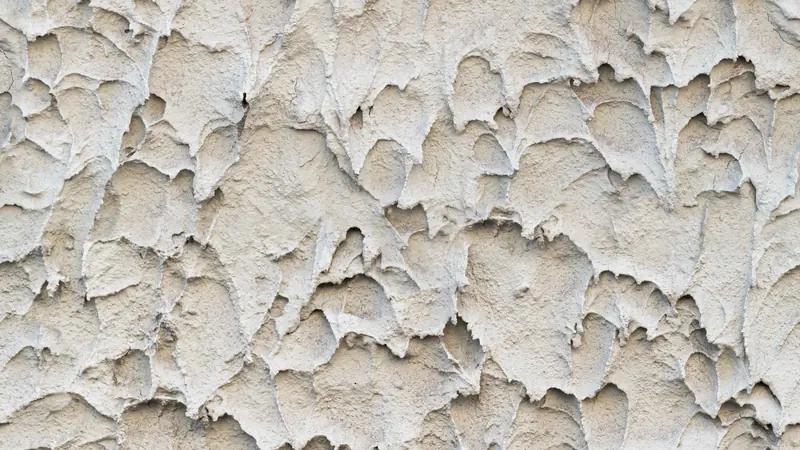
Lace texture stucco finish, one of the stucco textures and colors we match

Stucco Textures and Colors

Smooth, sand, lace, dash, and skip-trowel are textures. They describe the visible surface, not the wall system behind it. A mineral cement finish gives the classic hard exterior, with iron oxide pigment carrying color through the coat. A pigmented coating changes color at the surface instead. Matching existing work comes down to aggregate size, tool pressure, and application pattern.

Which Service Does Your Stucco Need?

The same crack can point to any of four stucco services. Cause and extent decide which one, so our stucco experts inspect the wall before anyone quotes a number. A hairline crack in a sound elevation is usually a repair. A recurring crack in an area that has already been repaired may point to movement or moisture behind the finish.

Repair: Isolated Cracks and Damaged Areas

Repair is right when the damage stays local. Typical examples include isolated cracks, a hole left by an old satellite mount, a chipped corner, or a small failed patch. It usually involves the smallest work area of the four scopes. When the surrounding wall remains sound, a localized repair may be more appropriate than resurfacing or replacement.

Resurfacing: Sound Walls That Look Tired

Resurfacing is right when the assembly is fine and only the surface has worn out. The signs are sun-bleached color, uneven patches from past work, a chalky finish, or a texture that dates the house. Nothing behind the finish needs correcting, so the work stays on the outside of the wall. Because partial recoating can remain visibly different, resurfacing is often completed across an entire elevation.

Remediation: Recurring Failures and Hidden Moisture

Remediation is the answer when an area that was already patched fails a second time. You might see a stain that returns each spring, a corner that cracks a year after the last repair, or a soft spot that spreads. When it repeats, the cause usually sits behind the finish. The scope starts with finding the path water is taking, and the patching comes after.

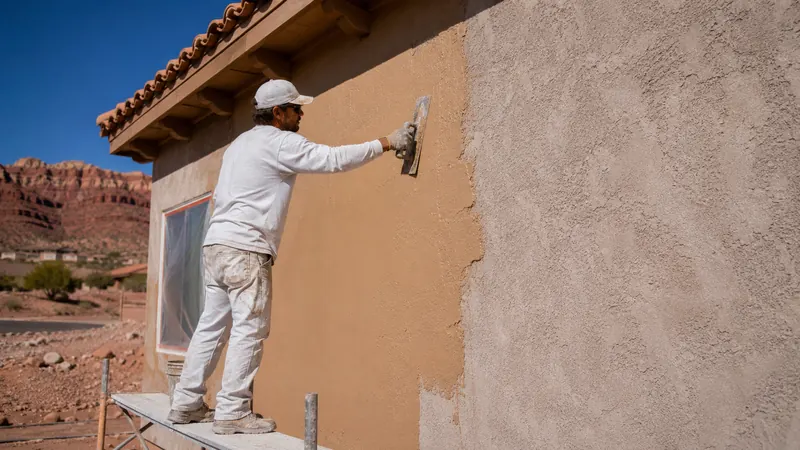
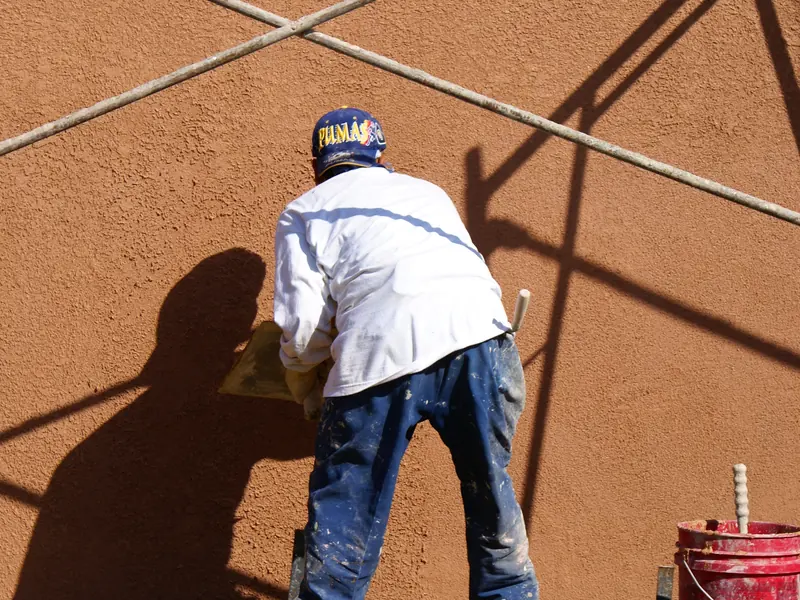
Stucco contractor applying a terracotta finish coat to a St. George home exterior

Replacement: Walls Past Saving

Replacement becomes worth considering when deterioration is widespread, concealed materials have failed, or repeated localized repairs are no longer economical. It is the only scope that takes the finish off and exposes the water-resistive barrier and the lath. Anything failed back there gets rebuilt rather than covered, and the wall comes back as a new assembly.

For an on-site inspection, call (435) 236-2699 or use our quote form.

Common Stucco Problems in St. George

Most homeowners recognize a visible change in residential stucco before they know the trade name for it. A crack, stain, bulge, or rough patch gives you a useful starting point without deciding what failed or how much work the wall needs.

  • Cracks and separation can appear as a hairline crack under 1/16 inch, a widening line, or an open gap around a corner, window, or door.
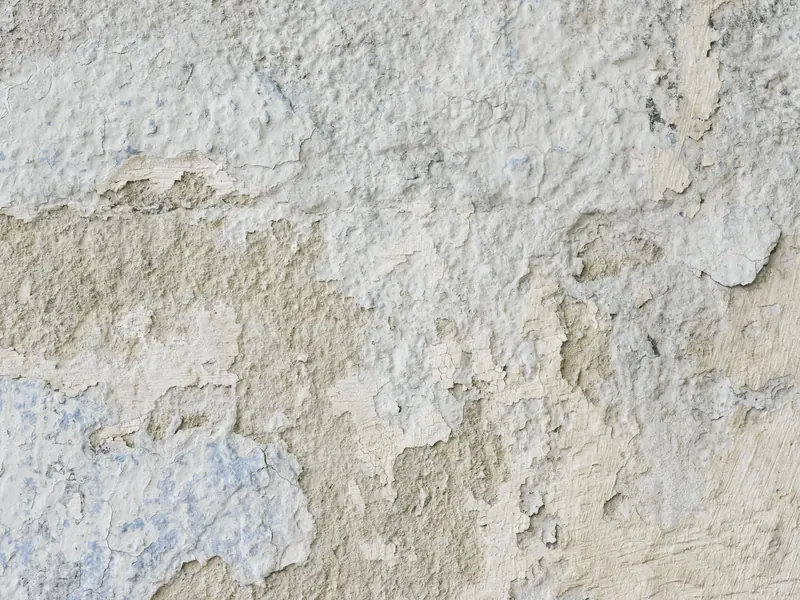
  • Loose areas may feel hollow, bow outward, or show delamination, the visible lifting of the finish coat away from the layers behind it.
  • Holes and impact damage include punctures, chips, and crushed spots near doors or where ladders, equipment, or hail have struck the surface.
  • Fading and discoloration can show as uneven color across one elevation, persistent staining, or chalking that leaves a powdery residue on the wall.
  • Damaged corners and edges often expose bent corner aid or casing bead under the finish.
  • Failed older patches may sit proud of the surrounding wall, crack around their edges, or reveal poor texture matching in direct sunlight.

One visible symptom can come from several different conditions. Two houses on the same street can show the identical hairline crack for unrelated reasons. So we look at the whole elevation, the corners, and the trim details first. A hairline crack and a bulging panel are different stucco repair jobs, even when both start as a phone call about cracks.

Residential and Commercial Stucco Projects

Residential stucco projects generally fall into two categories: maintaining an existing exterior, or applying stucco to new construction. Commercial work uses the same systems and finishes, on a different schedule and with more people to coordinate. We plan and estimate residential and commercial projects according to their different scheduling, access, and coordination requirements.

Homes and Additions

Most residential work begins in one of three situations. A wall has failed, an older exterior has aged, or the home is being prepared for sale. A pre-sale renovation usually covers the whole house so the finish reads consistently on every elevation. We schedule it around the listing date. Changing texture or color does not require changing the wall behind it, so the existing build-up stays in place. An addition ties into a roofline, framing, and drainage that are already in place, which makes it a different exercise from finishing two new walls. Custom homes specify the wall system and finish at the design stage, before framing begins.

Commercial and Multifamily Properties

Commercial stucco uses the same wall systems and finishes as a house. Commercial projects typically require more extensive access planning, sequencing, documentation, and stakeholder approvals. We coordinate submittals, schedules, inspections, and finish approvals with general contractors and property managers.

  • Retail, where storefront elevations are recoated between tenants, often to a firm turnover date.
  • Offices and professional buildings, phased so the work stays outside occupied floors.
  • Multifamily and apartment properties, with large repeated elevations.
  • Restaurants and medical buildings, scheduled around service hours, deliveries, and patient access.
  • Industrial and warehouse exteriors, which may combine stucco with tilt-up concrete or block.
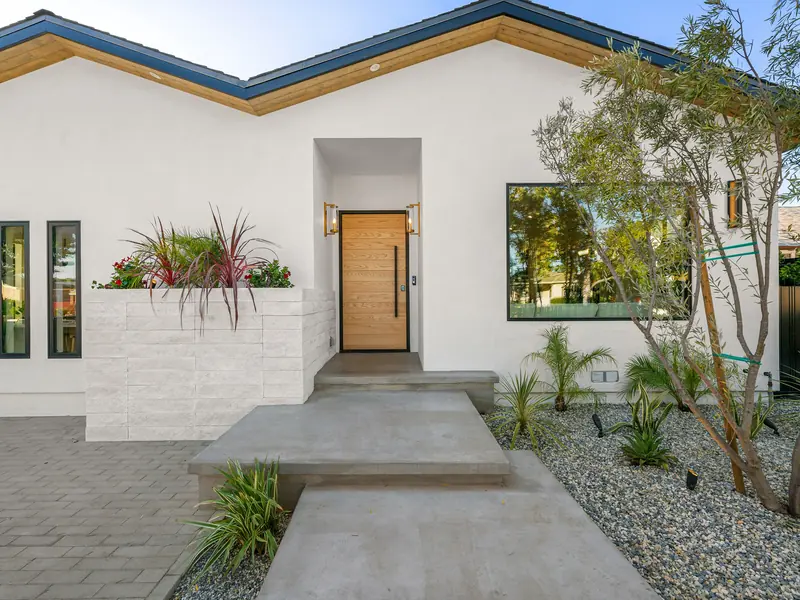
Finished white stucco exterior on a Southern Utah home with desert landscaping

Our commercial scope covers new construction, tenant improvements, exterior repairs, recoating, and scheduled maintenance. Tenant-improvement work must be coordinated with the landlord's turnover deadline. Existing properties need scaffolding and boom-lift access planned around sidewalks, loading areas, and parked vehicles. After-hours work and staged closures keep a business open while we are on site. Using one contractor across multiple phases helps maintain consistent texture, color, and documentation.

Our Stucco Project Process

  1. 1.

    Call or Use Our Quote Form

    Call (435) 236-2699 or send the quote form with the property address and what you are seeing on the wall. We confirm the details and book your free on-site visit.

  2. 2.

    Inspection and Estimate

    We inspect each elevation with you and review the spots you identified. You get a written estimate back, and we go through it with you before you decide anything.

  3. 3.

    Project Planning and Surface Preparation

    We confirm dates, wall access, crew staging, and material delivery. Our site protection covers windows, landscaping, and driveways while keeping your normal access usable. We obtain required permits and wait for HOA architectural approval.

  4. 4.

    The Work on Your Walls

    One crew remains assigned throughout application. The schedule already includes cure time between coats. We walk each finished elevation with you before moving to the next one.

  5. 5.

    Final Walkthrough and Cleanup

    We complete a final walkthrough with you across the finished elevations. Our crew resolves punch items, removes staging and debris, and leaves you with clean walls and usable surrounding areas.

Request your free estimate through our quote form, or give us a call today.

Call Now: (435) 236-2699

Stucco in the Southern Utah Desert Climate

St. George sits at a 2,530-foot elevation in the Mojave Desert transition zone. The city averages 8.80 inches of precipitation a year. Winters are mild, with normal snowfall around 1.4 inches. The wear on a stucco wall here comes from sun, heat, and daily movement rather than frost. We specify finishes, pigments, joints, and sealants for those loads.

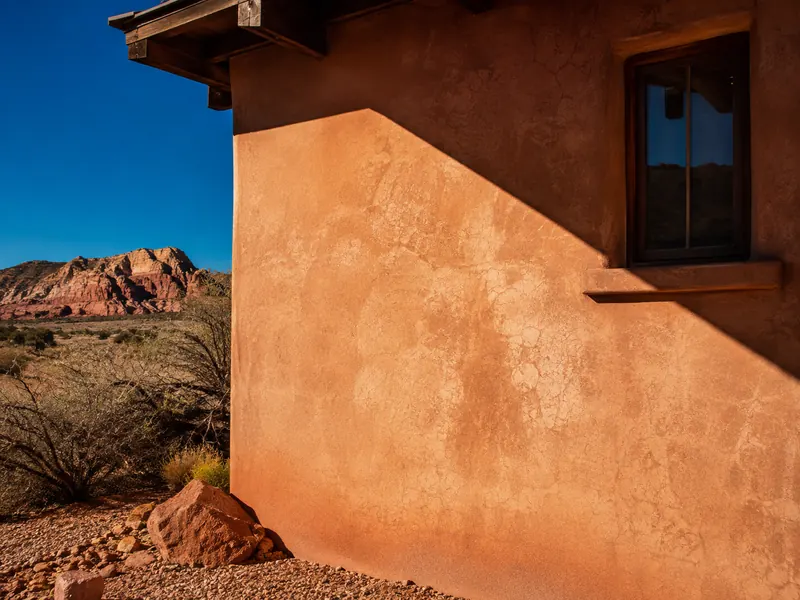
Sun-beaten stucco wall with fine surface crazing beside red rock in Southern Utah

Sun, Heat, and Color

About 300 sunny days and roughly 60 days above 100°F put a heavy heat and ultraviolet load on exterior finishes. UV breaks down organic binders and shifts the surface color over time. Fading shows up first on south and west elevations, which take the longest exposure. Integral iron oxide pigment holds color better than a coating under desert sun. Ultraviolet exposure is cumulative. A finish that looked right on day one can read washed out several years later. We specify fade-resistant acrylic finish where color retention matters.

Movement, Dust, and Aging Coatings

Large daily temperature swings make walls expand and contract, especially around windows, doors, and changes in substrate. A control joint gives the plaster a planned place to move. Elastomeric sealant stays flexible at transitions and perimeter joints. Older coatings stiffen with age and crack as the wall keeps moving. Windblown dust abrades exposed surfaces and dulls a finish over time. Dry air pulls water out of fresh plaster, so we moist-cure the work. A crack alone does not prove structural damage or moisture failure.

How Long Stucco Lasts and What It Needs

The base and the finish age on different clocks. A sound cement base lasts decades when water drains and openings stay sealed. The visible finish usually needs maintenance or renewal before the cement base does, and sealant around openings and control joints is the replaceable part. Upkeep is light. Rinse the dust off, keep the base of the wall clear so it can drain, and have the sealant checked once a year. A fog coat or a new finish coat resets the surface without rebuilding a sound wall.

What Stucco Work Costs in Washington County

The figures here come from published national and regional cost guides, last reviewed in August 2026. They are approximate, they are not specific to St. George, and they are not our prices. We start each estimate with a square-foot takeoff and account for scaffolding and lift access. Our itemized bid lists repair and repainting as separate scopes, so bids are easier to compare. Financing is available.

What a Stucco Price Is Built From

System type usually accounts for the largest cost difference. The 2026 guides disagree on exact numbers, but they agree on the order. One-coat is usually the least expensive, Traditional Three-Coat Stucco sits in the middle, and EIFS is usually the most. Installed figures across those guides commonly fall between about $6 and $18 per square foot. Acrylic finish alone does not make a wall EIFS.

Material costs include the water-resistive barrier, metal lath, casing bead, control joints, and integral pigment. Labor rises with the number of crew days and the cure time required between cement coats. Replacement estimates also include tear-off and disposal. The same 2026 guides place many repair projects between $600 and $2,700. Local pricing depends on access, damage, finish matching, and the required work area.

What Moves the Number Up or Down

Height is the first multiplier, because two-story walls need staging before anyone touches plaster. Tight side yards may require boom-lift staging or smaller scaffold sections. The amount removed also matters: a localized patch costs less than a re-skin or full tear-off to the sheathing.

Stucco going on over block, the kind of wall work priced in a written estimate

Texture complexity and existing color affect how long the match takes. Crews fabricate architectural bands, arches, and shaped details instead of floating a flat field. An occupied storefront can require protected entrances and shorter work zones. Phased scheduling or after-hours access adds crew days when customers, tenants, or employees must continue using the property.

About St. George and Southern Utah

The Virgin River and the Santa Clara River come together at St. George, on the edge of the Colorado Plateau. The Pine Valley Mountains rise to the north, and Zion National Park draws visitors past the city all year. The Brigham Young Winter Home and the St. George Dinosaur Discovery Site sit a few minutes from downtown.

Plaster has a long history on walls here. The St. George Utah Temple was finished in 1877 in local red sandstone. The stone was dressed rough so it would hold a plaster coat, and the finished exterior was white. Stone or block under a mineral coating is one of the oldest wall assemblies in town. It still suits this ground and this light.

Red rock and pale desert soils help explain why light-colored mineral exteriors remain common. Stucco shows up on far more houses in Washington County than wood or vinyl siding. The metro area holds roughly 208,000 residents, and construction has been a prominent local industry through that growth. New subdivisions keep going up while older properties reach the point of needing finish repairs or renewal.

Areas We Serve Around St. George

St. George Elite Stucco serves communities throughout Washington County, from the connected cities around St. George to smaller settlements near the county’s valleys and mountain approaches. Our coverage includes established residential areas, growing subdivisions, rural properties, and commercial addresses. Inside the city limits we also work in established districts and newer master-planned developments. We confirm the project location and site access when preparing each written estimate.

  • St. George, Washington, Santa Clara, Ivins, Hurricane, La Verkin, Toquerville, and Leeds
  • Winchester Hills, Diamond Valley, Dammeron Valley, Veyo, Brookside, Central, and Pine Valley
  • Gunlock, Shivwits, Virgin, and Apple Valley

St. George neighborhoods:

  • Downtown St. George, Bloomington, Bloomington Hills, Green Valley, Tonaquint, Southgate, and Sunbrook
  • Little Valley, Hidden Valley, Stone Cliff, SunRiver, Desert Color, Desert Canyons, Divario, and The Ledges

Some properties sit near a community boundary, or carry a mailing address that differs from the physical location. We go by the jobsite address when we confirm coverage.

What St. George Homeowners and Property Managers Say

Stucco Questions We Hear in Southern Utah

Do you provide residential and commercial service?
Yes. We work on both residential and commercial properties, including homes, additions, multifamily buildings, retail properties, offices, and new construction. See residential and commercial projects for what each involves.
How much does it cost to stucco a house in St. George?
Pricing depends on the wall system, access, how much has to come off, texture, and total wall area. See our pricing section for the published market ranges by system.
How do I tell whether my house has EIFS or cement stucco?
A light tap offers a clue: cement stucco over lath sounds firm, while EIFS often sounds hollow over foam. We confirm the assembly at an exposed edge or utility penetration.
Does every crack mean my stucco has failed?
Hairline shrinkage cracks are often cosmetic. We inspect the pattern, width, location, and nearby finish before deciding whether the condition is a local blemish or part of a wider problem.
How long does stucco last in this climate?
Decades for the cement base, as long as it drains and stays sealed. What shortens it is a blocked weep screed, soil piled at grade, or sprinklers hitting the wall daily.
How soon can you start after I accept the estimate?
Your written acceptance starts scheduling. We provide a realistic date range based on crew loading, project size, and season. Small repairs usually fit the calendar sooner than staged installations.
Can you match the texture and color on a repair?
Yes. We prepare a sample panel to compare aggregate, pattern, and color under site lighting. A fog coat can blend broader sun-faded areas when a spot repair would remain visible.
Do I need HOA approval to change my stucco color?
Most master-planned communities require architectural review for exterior color or texture changes. We supply product color and texture samples for the submittal, then schedule installation after written HOA approval.
Do you pull the permit for a stucco job?
Re-stucco or replacement can require a permit in St. George or Washington County, while a like-for-like recoat often does not. We verify the jurisdiction and handle required permit applications.
Will EIFS on my house affect insurance or resale?
Some lenders, buyers, and insurers ask about EIFS because older barrier systems developed moisture problems. We identify the actual wall assembly in writing so your records describe the property accurately.
Do you test for asbestos or lead before removing old stucco?
Before tear-off on a home built before 1980, we arrange laboratory testing for asbestos and lead in older coatings and adjacent materials. Results determine the containment, worker protection, and disposal plan.
Can you help with a homeowners insurance claim?
We can help with the documentation. You get dated photos and an itemized scope of work. Your policy and your adjuster decide what is covered, not us.

Get a Free Stucco Estimate in St. George

St. George Elite Stucco is a stucco contractor working on homes and commercial buildings of every size. We start with a free on-site walkthrough of each elevation, where we look at the visible conditions, the access, and the finish you want.

You get the estimate in writing, and there is no charge for the visit. Call (435) 236-2699 or request a free estimate through our quote form.